
Digital Radiography (DR) Panels & Image Detectors: Technology, Specifications, AI Integration & AERB Compliance
Digital radiography (DR) panels and image detectors enable high-resolution X-ray imaging with lower patient dose. Learn detector technology, specifications, AI integration, QA benchmarks, and AERB regulatory requirements in India.
HOT X-RAY PRODUCTS
5/8/20244 min read
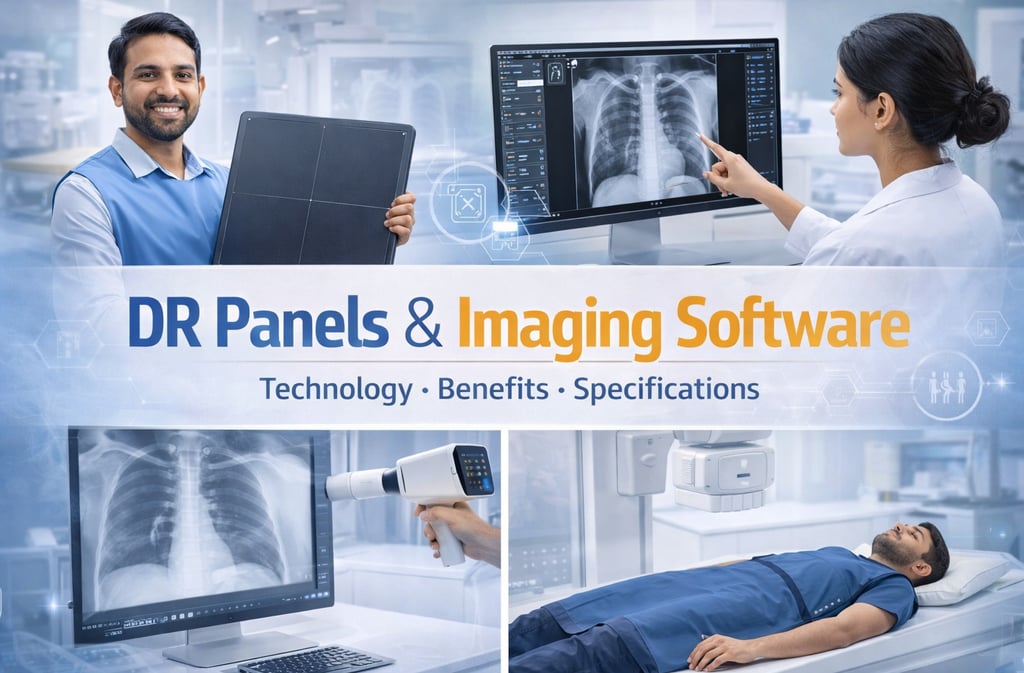
A Comprehensive Guide to Digital Radiography Panels (DR) and Image Detectors: Technology, Performance, and AERB Standards
In the modern diagnostic landscape, the transition from analog film to digital imaging has revolutionized clinical workflows. The "Imaging Device," as defined by the Atomic Energy Regulatory Board (AERB), is a detector unit or array of detectors that receives X-rays and responds by producing an electrical or light signal. Whether utilizing Computed Radiography (CR) or Digital Radiography (DR), these systems are central to achieving the dual goals of high-resolution diagnostic information and minimized patient radiation dose.
Evolution and Classification of Image Detectors
The current regulatory framework in India covers X-ray equipment used with various imaging systems, including radiographic film, computed radiography, digital radiography, and image intensifiers.
Computed Radiography (CR): These systems utilize Photostimulable Phosphor (PSP) plates. Unlike traditional film, PSP receptors capture the latent image, which is then scanned by a dedicated reader unit to create a digital file. Sources indicate that these plates must be periodically evaluated for artifacts and cleaned according to manufacturer-recommended procedures to ensure image integrity.
Digital Radiography (DR): Modern DR systems utilize flat-panel detectors that convert X-rays directly into digital signals. These systems are prized for their sensitivity and dose efficiency. For instance, ultraportable systems often utilize highly sensitive LG Oxide Detectors (e.g., 14” x 17” models) to produce immediate, high-resolution results in field or bedside conditions.
Technical Specifications and Image Quality Benchmarks
The functionality of a DR panel is defined by its ability to resolve minute anatomical details, a parameter often measured as Line Pair (LP) resolution.
Spatial and Contrast Resolution
High Contrast (Spatial) Resolution: This refers to the system’s ability to visualize small objects. According to AERB QA protocols, a system must be able to resolve a mesh pattern of 30 lines per inch or a bar pattern of 1.5 lp/mm.
Low Contrast Resolution: This benchmark tests the detector's sensitivity to structures that differ only slightly in radio-opacity from their surroundings. A standard test requires the resolution of a 3.0 mm hole pattern.
Detector Characteristics and Focal Spot: Research demonstrates that image quality is not solely dependent on the detector but also on the X-ray source. Smaller focal spots (e.g., 0.4 mm in handheld units vs. 0.7 mm in fixed units) significantly enhance the LP resolution captured by the digital sensor.
Scanning and DPI Thresholds
For receptors like PSP plates, the scanning resolution—measured in Dots Per Inch (DPI)—is critical. Studies show that scanning at 300 DPI versus 600 DPI can affect whether a system reaches its theoretical threshold for resolution, emphasizing the need for high-performance hardware in the digital chain.
Performance and Dose Efficiency
One of the primary benefits of transitioning to digital detectors is the significant reduction in Entrance Skin Dose (ESD) and total effective patient dose.
Dose Reduction: Optimized DR and PSP protocols have been shown to reduce patient dose significantly. In dental simulations, a full mouth examination using digital receptors required only 36 µSv compared to 98 µSv with traditional wall-mounted sources, representing a substantial improvement in patient safety.
Dose Efficiency: The high sensitivity of digital detectors allows for lower mAs (milliampere-seconds) settings while maintaining diagnostic image quality. However, operators must manually fine-tune these parameters, as most portable systems lack Automatic Exposure Control (AEC).
Integration with AI and Health Information Systems
The utility of modern DR panels is amplified when paired with advanced software.
Computer-Aided Detection (CAD): Digital detectors are now frequently paired with AI-powered CAD software. This is particularly vital in large-scale screenings, such as Tuberculosis (TB) programs, where CAD tools provide automated, standardized interpretation without requiring scarce expert human readers.
PACS and Connectivity: To prevent data loss, imaging devices must be interconnected via computer networks in accordance with national and international standards. The Picture Archiving and Communication System (PACS) must ensure that patient information is not lost or unintentionally altered during storage or transmission.
AERB Regulatory and Quality Assurance (QA) Requirements
Operating a digital detector system in India requires strict adherence to AERB Safety Code AERB/RF-MED/SC-3 (Rev. 2).
Mandatory Calibration and Maintenance
Digital detectors must be calibrated periodically as per the manufacturer’s recommendations to maintain accuracy and functionality.
Periodic Quality Assurance (QA): The end-user is responsible for ensuring that periodic QA of the equipment—including the performance of the imaging system—is carried out by authorized agencies at least once every two years.
Licensing and e-LORA
Type Approval: It is the responsibility of the manufacturer or supplier to ensure that all digital imaging systems marketed in the country are AERB Type Approved.
Licence for Operation: No diagnostic X-ray equipment, regardless of its digital detector type, can be operated for patient diagnosis until a valid Licence for Operation is obtained via the e-LORA portal.
Operational Best Practices for Radiation Safety
While digital detectors often require lower doses, the operator's safety remains a priority, especially when using ultraportable or handheld systems where distance and shielding are the primary defenses.
Congruence Checks: The X-ray field must be precisely aligned with the optical light field to prevent "cone cuts" and unnecessary retakes. AERB mandates a tolerance where the discrepancy must be ≤ 0.02 of the focal spot-to-image receptor distance (S).
Central Beam Alignment: If the X-ray beam is not perpendicular to the image receptor, the resulting digital image may be distorted. The tolerance for central beam alignment is < 1.5°.
PPE and Monitoring: Operators of digital systems are mandated to use TLD badges and lead aprons (minimum 0.25 mm lead equivalence) to ensure their occupational dose remains within the prescribed limit of 20 mSv per year.
Conclusion
Digital radiography panels and image detectors are the "hot products" driving the future of diagnostic imaging. By providing superior resolution, enabling AI integration, and facilitating lower patient doses, they fulfill a critical role in modern medicine. However, as highlighted by AERB, the technology is only as effective as the Quality Assurance and regulatory compliance that support it. For a facility to be successful, procurement must be matched by a rigorous commitment to calibration, periodic QA testing, and e-LORA-based licensing to ensure the highest standards of safety and diagnostic accuracy.
About XRAYNEWS.NET
XRAYNEWS.NET provides updates on medical and industrial X-ray technologies, radiography insights, regulatory awareness, and imaging industry developments.
Regulatory Resources
© 2025. All rights reserved.
Video Resources
Popular Topics
Quick Links
Stay Updated with X-Ray Industry News
Subscribe to receive updates on X-ray technology developments, radiography insights, and industry news.